
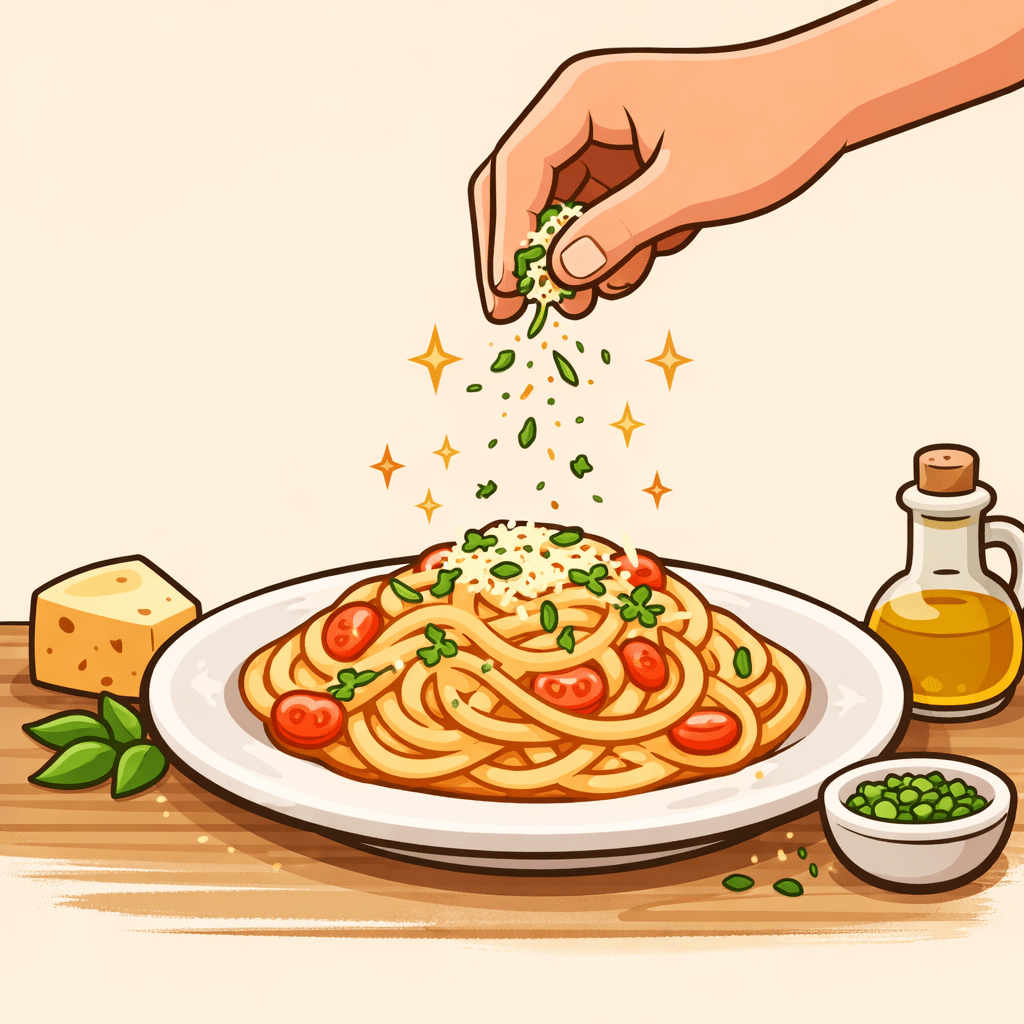
Garnishing. Some people call it easy, others call it complicated, and some even call it unnecessary. But I call it easy, sometimes complicated, and absolutely necessary.
The only reason I say it can be complicated is because, all too often, I see family or friends staring at a finished dish, wondering what to garnish it with—if anything at all. Well, I’m here to help answer your questions about garnishing… or at least most of them.
Garnishing 101
Garnishing doesn’t have to be complicated. Yes, there are times when we finish a dish and feel like we have nothing to garnish it with—but what if I told you that isn’t true? You almost always have something you can use; sometimes you just need to think a little outside the box.
When you garnish a dish, you’re enhancing its visual appeal. It’s true—we eat with our eyes first. If a dish doesn’t look appealing, we’re far less likely to try it, even if people swear it tastes amazing.
Garnishing is also about adding complementary flavors. Take teriyaki chicken, for example. You might garnish it with sesame seeds—not only to make it look nicer, but to add a subtle crunch and extra texture. Which brings us to another important point: we garnish to introduce contrasting textures.
I know some people don’t love certain textures (trust me, I get it), and if you’re one of them, garnishing can feel a little intimidating. But there are textures you simply can’t get without a garnish.
Once you understand the why behind garnishing, it suddenly becomes much easier—and a lot less intimidating.
Easy Garnishes That Instantly Elevate A Dish
Picture this: you’re busy, you barely have time to cook dinner for yourself or your family, and finding a garnish feels like the last thing you want to worry about. So you make a pot of mac and cheese and call it a night.
But even something as simple as mac and cheese can be easily garnished. Bacon bits are a great option if you want to add a little protein. Toasted breadcrumbs add texture. Or maybe just a little extra cheese. See? Three easy ideas right there—and yes, you have full permission to use them.
Now let’s talk about something a little more involved, like orange chicken. Your first thought might be, “Sesame seeds. Duh.” And you’d be right—but what if you don’t have any? In that case, chopped fresh chives work beautifully. Orange zest or thin strips of orange peel are also great options. If you’re making orange chicken, chances are you already have oranges on hand.
And then there’s pasta—arguably one of the easiest dishes to garnish because the possibilities are endless. We’ve already talked about mac and cheese, but what about Alfredo? Parmesan cheese is a classic choice, maybe with some fresh parsley, chopped or left whole. Making salmon Alfredo? Try a sprig of fresh dill, a sprinkle of Italian seasoning, some chopped parsley, or even a bit of lemon zest.
Garnishing doesn’t have to be hard—you just need to think about what each dish needs. What flavors pair well together? What textures make sense? Once you start asking those questions, you’ll be garnishing like a pro in no time.
Stop Overdoing It!
I’ve said this throughout the post, and I’ll say it again: garnishing doesn’t have to be complicated—but it can be, especially for beginners. Even cooks who are confident in the kitchen might not realize how easy it is to overdo a garnish.
Yes, that is a thing. I’ve done it myself. One time I made salmon and added way too much Italian seasoning. That’s all I could taste—I could barely taste the salmon at all. There is such a thing as too much garnish… or the wrong garnish altogether.
If you add too much garnish, you might be able to scrape some of it off, depending on the dish. I know that doesn’t sound very “chef-like,” but sometimes you do what you have to do—and you’ll learn for next time. If you use the wrong garnish for the wrong dish, though, you may be a bit stuck. At that point, you can only hope it was meant to enhance the look and not the flavor or texture.
At the end of the day, garnishing is pretty simple once you know what pairs well with what. But it’s also easy to mess up—and that’s okay. Garnishing is an art, just like cooking. The dish is the masterpiece, and the garnish is the final touch that brings it all together.
Now go on—take what you’ve learned and start garnishing like a chef.
Until Next Time…
Stay Saucy
Hailey 🍝
 Pasta-tively Delicious
Leave a comment